

Why accurate roof leak detection matters
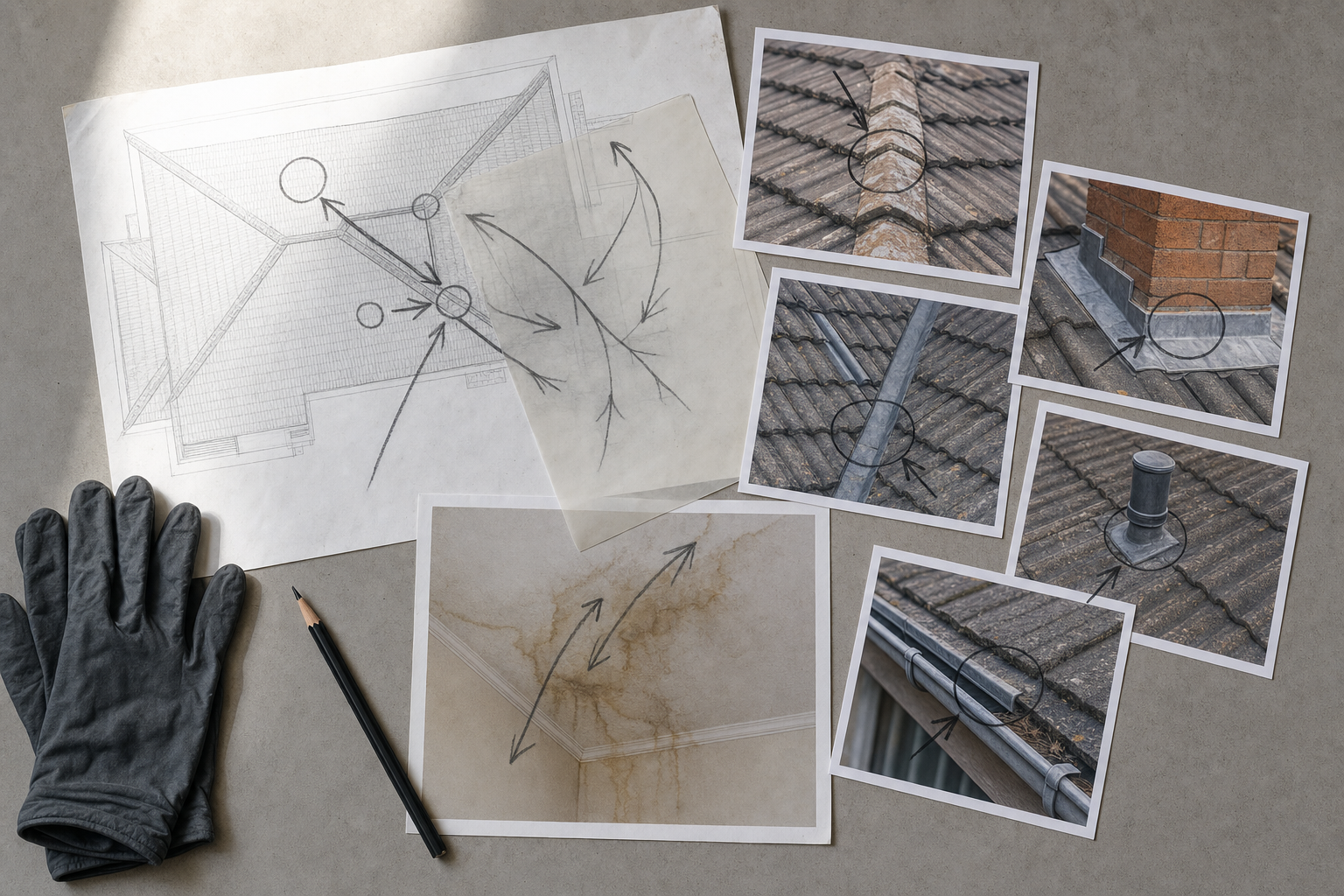
How we identify the source of a roof leak
A damp patch on a ceiling can point in entirely the wrong direction. Water may enter through one part of the roof, travel along timbers or membranes, and only show itself indoors after a fair bit of wandering about first. Choose Smith & Son Roofing & Guttering when the problem needs proper diagnosis rather than another guess and another patch. We inspect coverings, ridges, valleys, flashing, chimneys, edges, penetrations and drainage points systematically, using visible condition, staining patterns and likely water paths to narrow down the fault to the part of the roof that actually needs repair.
Roof inspection findings and repair priorities
Good leak detection saves time, money and frustration because the repair can be directed to the source instead of the symptom. With Smith & Son Roofing & Guttering, the inspection findings explain the likely entry point, the components involved and which repairs matter most. That is useful when indoor signs are vague, when more than one roof detail could be responsible or when a previous patch has not solved the problem. Rather than chasing the latest wet mark around the house, you get a clearer route towards fixing the roof section that is really at fault.
Frequently asked questions
Why is the leak hard to find from indoors?
Because the place where water shows up indoors is often not the place where it first got into the roof. It may travel along structural timbers, underlay or membranes before dripping through, which makes indoor evidence useful but not reliable on its own.
What parts of the roof do you inspect for a leak?
We look at the roof coverings, ridge and valley details, flashing, chimney areas, edges, penetrations and drainage points, along with visible clues from staining and water paths. The aim is to build a picture of how moisture is moving, not just where it is landing.
Can leak detection help if a previous repair failed?
Yes. If a roof has already been patched and the same problem returns, it often means the original entry point was missed or another nearby defect was also involved. A more systematic inspection helps narrow the issue down before further repair money is spent.