
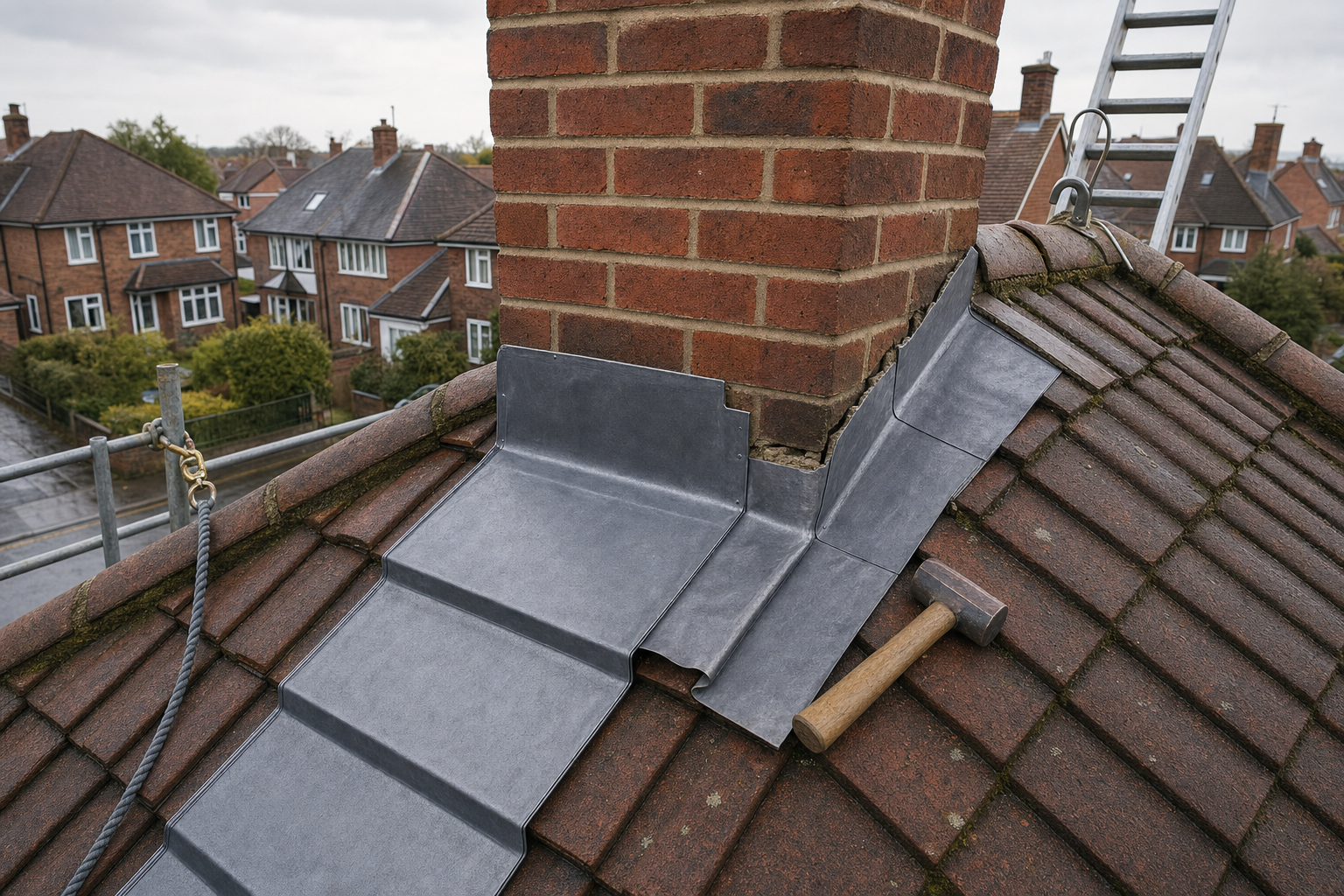
What our lead flashing repairs include
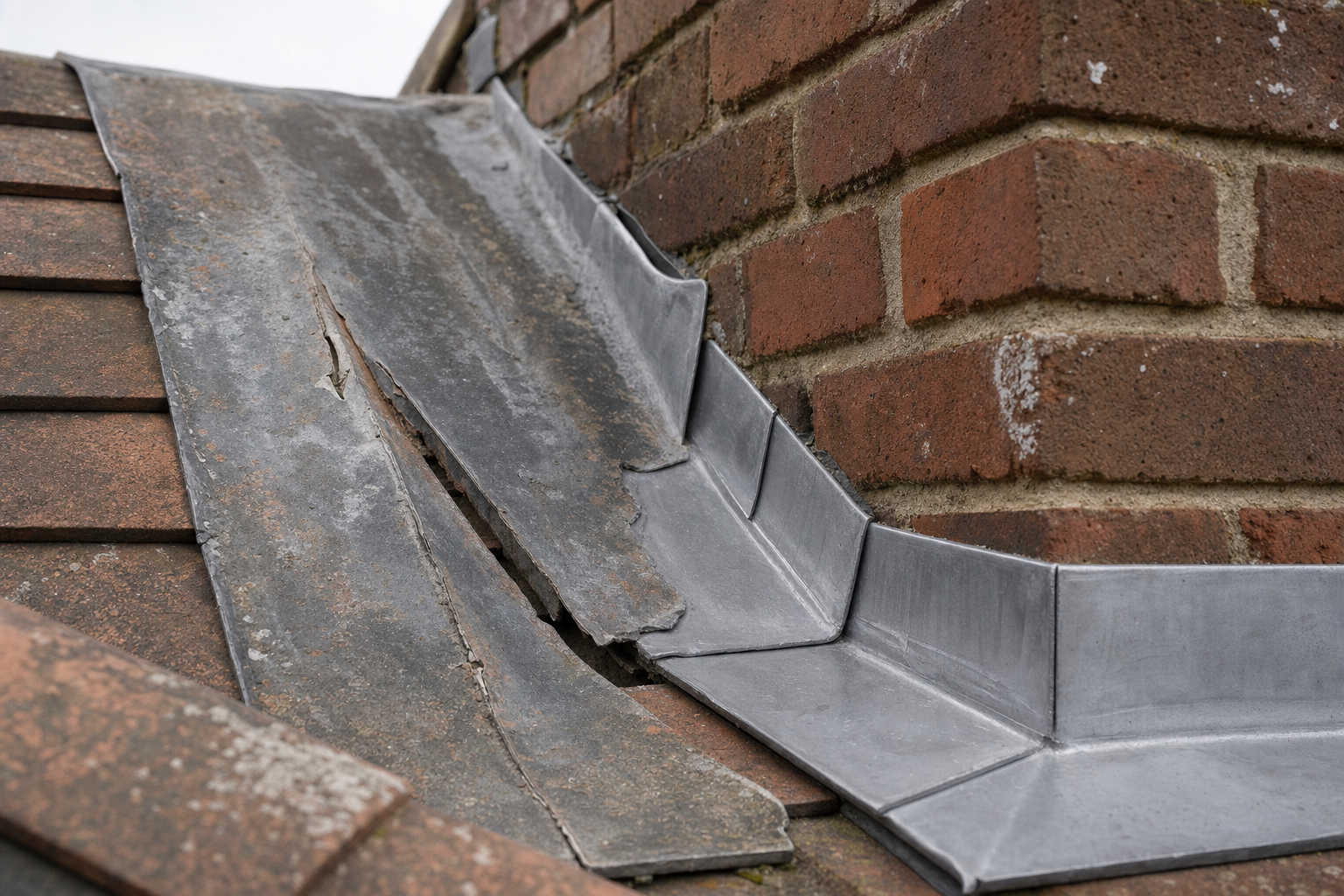
Lead flashing repairs for chimneys, dormers and roof junctions
Flashing exists to seal the awkward places a roof cannot do on its own. Around chimneys, dormers, abutments, steps and roof edges, it keeps water moving back onto the covering instead of into the property. When lead splits, lifts, slips or loses its seal, leaks often keep returning no matter how much attention the nearby tiles get. Choose Smith & Son Roofing & Guttering when the real weak point is at the junction. We inspect the type of flashing involved and identify whether the trouble sits with cracked lead, loose sections, open joints or failed seal lines.
From local patching to full flashing renewal
Not every lead defect needs the same repair. With Smith & Son Roofing & Guttering, the work may involve patching, sealing, securing, stripping and refixing, repairing a joint or fully renewing the flashing where it has moved too far or worn out. We also explain whether you are dealing with apron, step or chimney flashing, because understanding the detail helps the repair make more sense. Properly formed and fixed leadwork should send water back where it belongs. If it does not, the leak usually has no plans to retire quietly on its own.
Frequently asked questions
How do I know if flashing is causing the leak?
Leaks around chimneys, roof edges, dormers or wall junctions often point towards flashing, especially if tiles nearby seem sound. Signs can include damp around those areas, visible lifting or splitting in the lead, or repeated leaks after other parts of the roof have already been patched.
Can lead flashing be repaired without full replacement?
Yes, if the defect is local and the surrounding lead is still in workable condition. A split joint, lifted edge or loose section may be repairable. If the flashing has moved badly, deteriorated over a longer run or lost shape, renewal may be the sounder answer.
Do you repair flashing around chimneys only?
No. Chimneys are common, but flashing is also used at abutments, steps, dormers and roof edges. The important part is identifying which junction has failed and making sure the repair restores a proper path for water back onto the roof covering.