
Ridge Tile Repair in Leicester: How to Spot Loose Ridge Tiles Before Wind and Rain Cause a Leak
If you have noticed a ridge tile sitting unevenly along the roof peak, cracked mortar on the top line of your roof or small chunks of cement in the gutter, it is worth getting it checked before the weather changes. Ridge tile repair Leicester homeowners arrange early is often a far simpler job than tracing a leak after strong wind or heavy rain has opened the roof up.
At Smith & Son Roofing & Guttering, we focus on fast, reliable domestic roof repairs across Leicester and nearby towns. Our small experienced team handles practical in-and-out repairs, including leak fixes, chimney repairs, flat roof work, roof tiling, and ridge or valley work. In this guide, we explain how to spot loose ridge tiles safely, why they matter, and when it makes sense to book a free quote.
What ridge tiles do and why they often become a weak point
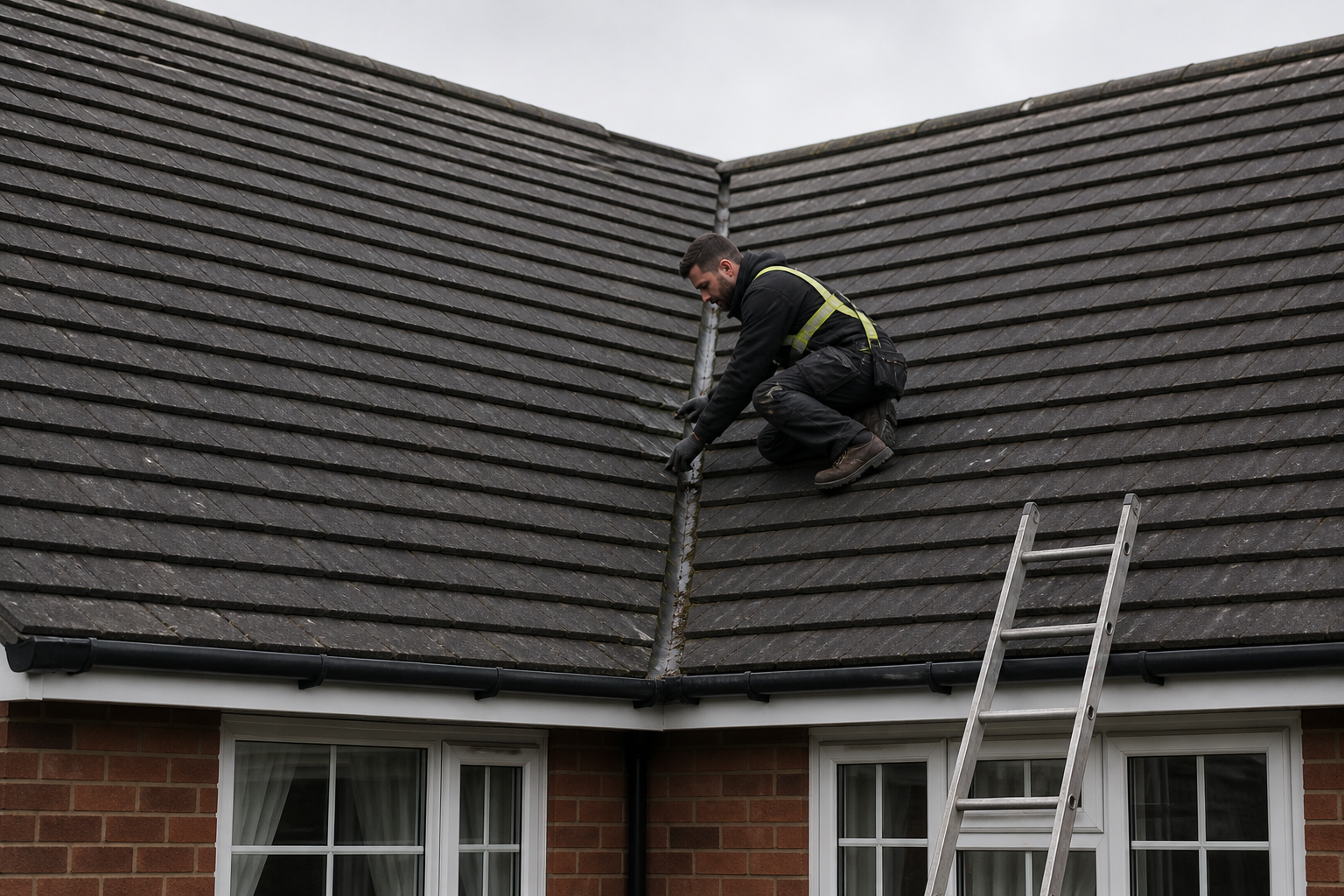
Ridge tiles run along the highest point of a pitched roof. Their job is to cover and protect the joint where both roof slopes meet, helping the roof shed water properly while keeping the top of the roofline secure.
Because they sit right at the apex, ridge tiles are exposed to constant wind, rain, temperature changes and movement. Over time, the bedding or mortar that holds them in place can crack, loosen or wear away. Once that happens, the ridge line can start letting water in or become vulnerable during bad weather.
Common reasons ridge tiles loosen
Weather exposure: The ridge line takes the brunt of wind-driven rain and gusts.
Ageing mortar: Older bedding can dry out, crack or lose its bond.
Roof movement: Small movement over time can affect joints and bedding.
Freeze and thaw conditions: Water entering small cracks can make them worse.
If a defect is caught early, a local repair is often all that is needed. Leave it too long, and the problem can spread to nearby tiles or lead to internal damp.
Ridge tile repair Leicester: signs you can spot before a leak starts
You do not need to climb onto the roof to spot many ridge problems. In fact, we strongly advise against it. A careful look from ground level is often enough to notice that something is not right.
1. A ridge tile looks uneven or out of line
If one ridge tile appears raised, tilted or slightly separated from the line of the others, it can suggest movement in the bedding or fixings. Even a small shift can allow wind and water to work into the gap.
2. Mortar on the ridge line looks cracked or missing
One of the clearest warning signs is cracked, crumbling or missing mortar around the base of a ridge tile. If the joint no longer looks solid and continuous, the tile may not be as secure as it should be.
3. Pieces of mortar keep appearing in the gutter or on the ground
Homeowners often notice the problem indirectly first. Small lumps of mortar below the roofline, on a driveway or in the gutter can mean the ridge bedding is breaking down above. If this keeps happening, it is sensible to arrange a roof check.
4. You can see a visible gap beneath the ridge
Any obvious gap around the ridge area deserves attention. The roof should not have open spaces at the top where rain can be driven in. What looks minor in dry weather can become a leak during prolonged rain or strong winds.
5. There is damp in the loft or a stain high on an upstairs ceiling
Not every ridge fault causes an immediate visible leak indoors, but some do. If you notice damp near the top of the loft space, water marks after heavy rain or a ceiling stain that seems to reappear, the ridge line is one of the areas worth checking along with the surrounding tiles.
6. The problem appeared after windy weather
After a storm or a spell of strong wind, it is worth looking up at the roof from outside. Ridge tiles that were already slightly loose can shift further in poor weather. If you can see movement at the top of the roof, it is best not to leave it to the next downpour.
Why acting early matters
Loose ridge tiles are easy to put off because the fault is high up and may not seem urgent at first. The trouble is that the ridge sits in one of the most exposed parts of the roof. Once the seal or bedding starts to fail, the weather usually makes it worse rather than better.
Water ingress can start quietly: Rain may track beneath the ridge and show up later as damp, staining or a recurring leak.
Nearby tiles can become more vulnerable: Movement at the ridge can affect the surrounding roof covering.
The repair can become more involved: A small local fix is often preferable to broader damage spreading across the roofline.
Storm damage risk increases: A tile that is already loose is more likely to cause concern in high winds.
If bad weather has already affected other areas of the roof, we can also help with roof repairs in Leicester and practical leak-finding work.
What to do if you think a ridge tile is loose
Do not climb up to check it yourself. Loose ridge tiles, ladders and wet roof coverings are not a safe combination.
Inspect from ground level only. Stand back and look for gaps, movement or missing mortar along the roof peak.
Take clear photos if you can. Photos can help when explaining the issue and may show whether one area has shifted after wind or rain.
Check inside after rainfall. If it is safe to do so, look in the loft for damp patches or signs of water tracking near the top of the roof.
Arrange a professional inspection. An early visit can confirm whether the issue is limited to one section or part of a wider repair.
If the damage appeared after recent high winds or you can see wider movement across the roofline, our emergency roofing help in Leicester may be the right next step.
How we approach ridge tile repairs at Smith & Son Roofing & Guttering
Every roof fault is slightly different. Some ridge issues are isolated to one cracked or shifted tile. Others involve a short run of failed bedding that needs more than a quick patch. Our approach is to assess the condition properly and recommend a practical repair that suits the fault in front of us.
Depending on the condition, repair work may include
Securing or re-bedding a localised section where movement is limited to one part of the ridge line.
Replacing a damaged ridge tile if the tile itself is cracked or broken.
Checking adjoining roof tiles to make sure surrounding coverings have not been affected.
Looking for related leak points if the ridge problem has allowed water to track further down the roof.
Because we specialise in straightforward domestic repairs rather than pushing homeowners towards large full re-roofs, we focus on the repair that makes sense for the roof's actual condition. If the issue sits alongside slipped coverings lower down the slope, we can also advise on roof tiling repairs in Leicester so the whole area works together properly.
Why Leicester homeowners choose our team for practical roof repairs
When you are dealing with a visible roofing fault, you want clear advice and a prompt response. Smith & Son Roofing & Guttering is a local roofing team based in Leicester, and our work is centred on fast, reliable domestic roof repairs.
Small experienced team: We handle practical repair jobs including leak fixes, ridge and valley work, chimney repairs and flat roof work.
Free quotes: You can ask us to inspect the issue and quote before work goes ahead.
Fast response: We aim to respond quickly so customers can avoid prolonged water damage or disruption.
Straightforward service: Our focus is on dependable repairs for homeowners across Leicester and nearby towns.
Simple checks that can help prevent ridge problems from getting worse
No roof lasts forever without maintenance, but a few sensible checks can help you spot issues earlier.
Look up at the roofline from the ground after spells of strong wind.
Pay attention to fresh cracks in ridge mortar or tiles that no longer sit evenly.
Do not ignore bits of mortar collecting in the gutter or below the eaves.
Keep rainwater goods flowing properly so water is carried away as intended. If overflow or blockages are also an issue, we can help with gutter cleaning and gutter repairs in Leicester.
Book a repair before the next period of heavy rain if a defect is clearly visible.
FAQs about ridge tile repair in Leicester
How do I know if I need ridge tile repair in Leicester?
Common signs include a ridge tile that looks out of line, cracked or missing mortar along the roof peak, pieces of bedding material on the ground, or damp appearing after rain. If you can see a change from ground level, it is worth arranging an inspection.
Can a loose ridge tile cause a roof leak?
Yes, it can. The ridge protects one of the highest joints on the roof. If the seal around it fails, wind and rain can get into the roof structure and cause leaks or damp over time.
Is ridge tile repair always a big job?
Not necessarily. If the fault is localised and caught early, the repair may be limited to a small section. The best approach depends on the condition of the tile, the bedding and the surrounding roof area.
Should I wait until I see water inside?
It is usually better not to. Visible movement or cracking at the ridge is often enough reason to act before internal damage starts. Early attention can help keep the repair smaller and more straightforward.
Do Smith & Son Roofing & Guttering offer free quotes?
Yes. We offer free quotes for domestic roofing repairs and work across Leicester and nearby towns.
Seen loose ridge tiles? Book your free quote
If you have spotted movement at the top of your roof, now is a good time to get it checked before wind and rain turn it into a leak. Smith & Son Roofing & Guttering provides fast, reliable domestic roof repairs, with a focus on practical solutions for homeowners in Leicester and nearby towns.
For a free roofing repair quote and quick local advice, visit Smith & Son Roofing & Guttering. The earlier a ridge issue is inspected, the better the chance of keeping the repair simple.
Comments